Duration
Sept – Nov 2024
Role
UI/UX Designer
Colaborations
UI/UX Designers
Developers
Overview
A campus food-ordering app that helps students find and join live group orders nearby. Solo diners can order with other students — even those they don’t know — and split delivery fees without having to coordinate a group themselves.
PROBLEM
For students ordering a single meal, delivery fees can make a small order feel disproportionately expensive. Sharing the fee could help, but finding someone ready to order at the same time isn’t always easy. Students who want to order together may still end up ordering alone and paying the full delivery fee.
UNDERSTAND THE USERS
Affinity Diagram
We interviewed 16 students on campus and grouped their responses using affinity mapping. Across their ordering habits, budgets, and daily routines.

Mapping pain points
As we walk through the insights, we see 3 common pain points among the student users:
High delivery fees make small orders hard to justify

"I only want a small meal, but the delivery fees is almost half of it."
Finding others ready to order at the same time is difficult

"I'd do group order, but at the time I want to order, I can't find anyone around me to do group ordering. I always have to do it alone and end up paying high fees."
Pickup needs to fit students’ schedules and walking limits

"Food pickup is cheaper, but sometimes it's too far. I don't always have time to walk that far."
Competitor Analysis
To understand the market, we analyzed existing food delivery platform (UberEats, EASI, DoorDash) to validate our findings on user experience.
Here, we evaluate the strengths, weakness, UX design and business models.
Key findings
Most apps are optimized for general users, overseeing the students needs.
While 'group order' features exist, they typically assume social connections.
Users may find it difficult to understand how total costs are calculated.



How Might WE?
Students ordering alone face the full delivery fee for a single meal.
Sharing that fee could help, but 2 challenges remain:
Finding others to order with
Students need others who are ready to order at the same time
Finding a convenient pickup location
The savings need to be worth the time and effort of collecting the food
This led us to ask:
How might we help students share delivery costs without having to organize a group themselves or travel too far to collect their food?
DESIGN DECISION #1
A view list of nearby group orders that is sorted by the countdown timers until the order is closed.
Limitation
This helped with quick scan, however…
Not every user knows the location of the pick-up point. Users need to go to map app to search for a specific location which is overwhelming if there are multiple orders.
Users prefer to sort orders in distance rather than time windows.

DESIGN DECISION #2
Added an in app map and pick up distance from user's current location.
Added the filter or sorting options (distance, time window, cost) that with the minimum number.
Why it works?
Users can scan quickly based on preferences and easily know the pick-up location without the need to navigate to other apps, minimizing the process of searching.

SOLUTION DEMO
Solo diners can join group orders with other students nearby
Students can join or host the live group orders with other students (whom they don't know). This helps split the cost between solo diners flexibly
All orders have transparent delivery pricing, so students know if they’re overpaying for a short-distance delivery
WHAT I LEARNED
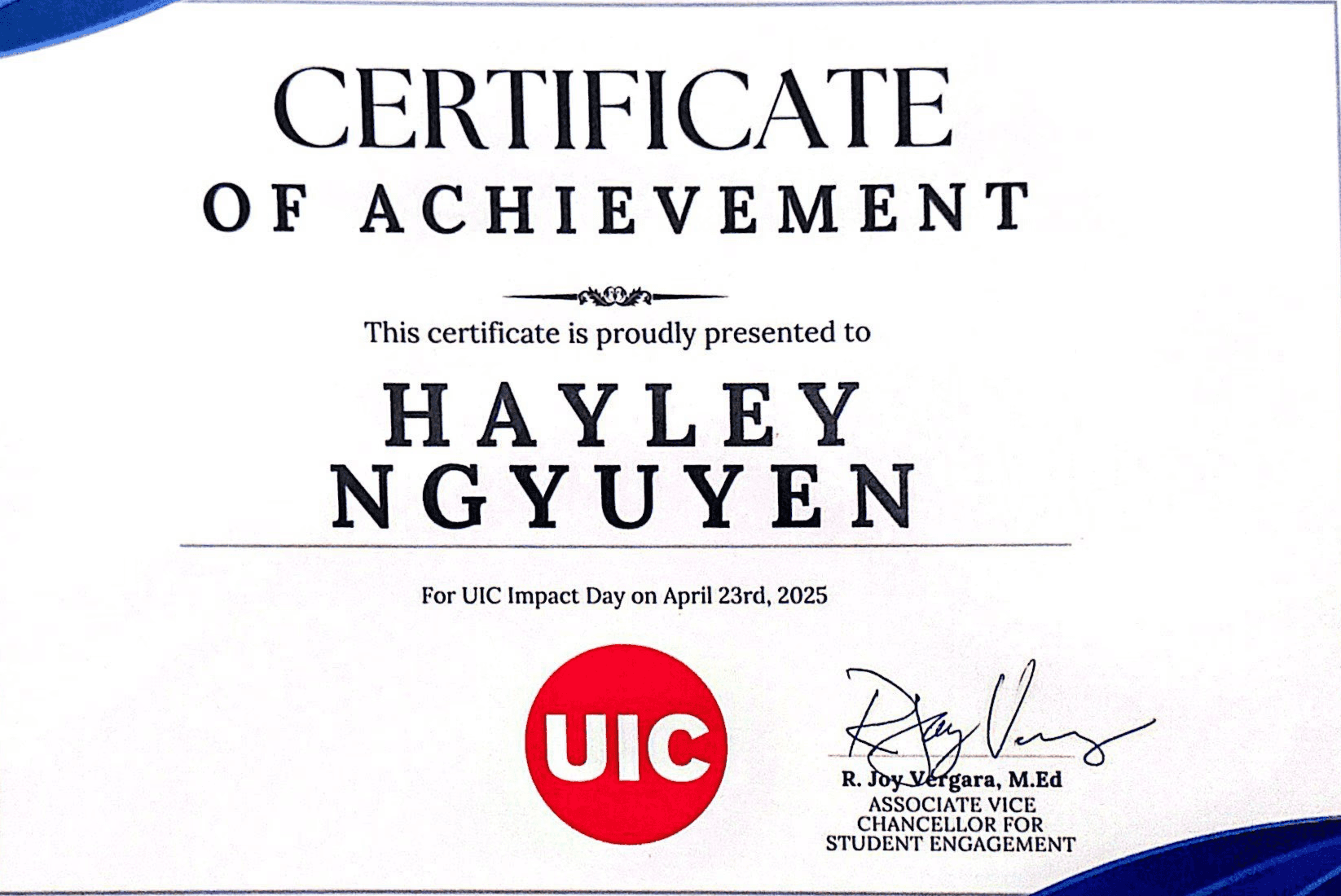
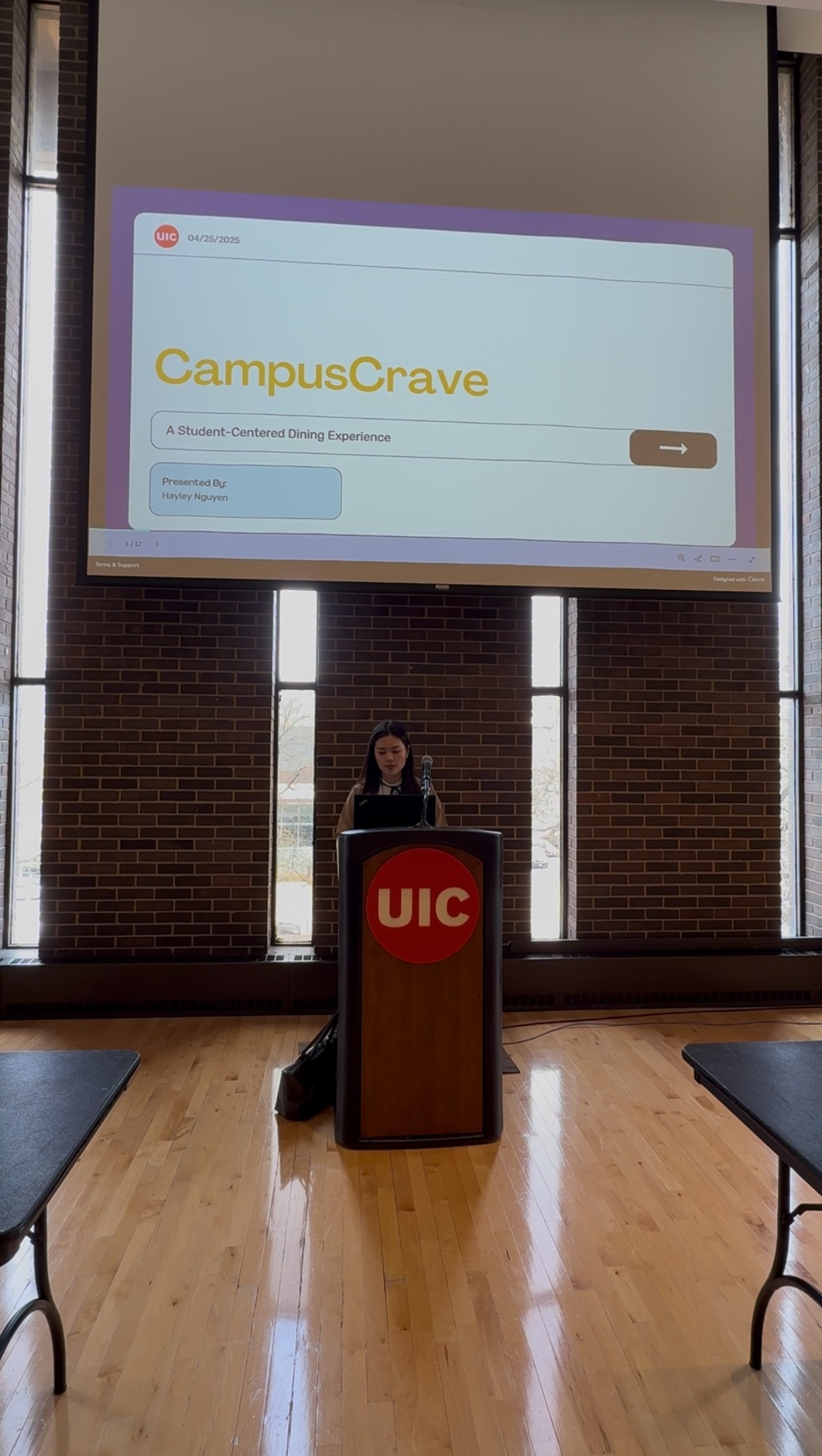
🏅 Recognized as 'Impactful Project' at University of Illinois at Chicago


Let's
design
build
create
together
© 2026 Hayley Nguyen