Duration
2025 - Present
Roles
#
UX Design
#
Enterprise
FarmLink
FarmLink is a marketplace that connects small farmers with buyers that focuses on transparency and traceability of the agricultural supply chain. As a founder and product designer, I drove FarmLink’s design from discovery to an MVP, building a brand new platform that digitizes a fragmented trade process and strengthens farmer-buyer trust.
Farmers usually faced 3 persistent challenges:

Solution (demo) 📱
1. Integrated product traceability form
When posting a product online, farmers provide product's information. These are shown along in the product listing so farmers can prove their products quality with data.
2. Self-managed online store
Farmers open their own store and set their own prices, cutting out middlemen and reaching buyers directly. FarmLink handles verification so farmers focus on selling.
3. Streamlined order management
Farmers receive, confirm, and track every order in one place, reducing missed sales and confusion from indirect farmer-buyer communication.
Let's backtrack the process ⚙️
📍 Mapping Pain Points
From the interviews with 15 small-mid size farmers, here are what we found:
Harvest under pressure 🕐

“I don't know exactly how much I’ll harvest, but I still have to commit to a number, it's always a gamble."
Price controlled by middlemen 💰
“A good harvest should be good news, but it often means selling cheaper just to avoid waste."
Lack of credibility 📦
“I worked hard for that crop, but once it leaves my farm, I don’t know where it goes or how it’s sold."
🔎 Competitor Analysis
To understand the market, we analyzed existing similar platform including UberEats, EASI, DoorDash. Here, we evaluate the strengths, weakness, UX design and business models.
Key findings:
Lack of farm-level data and real traceability features
Too feature-heavy and text-dense for farmers that have limited smartphone literacy
Most promote large-scale distributors, not with smallholder farmers


📌 Identify MVP Features
We used the affinity mapping to organize the gathered informations. We group the problem areas into themes that help us to address “How might we?"
How might we make the process easy for farmers to manage their sales independently?
How might we improve farmers product distributions to buyers without barrier in trust?
✏️ Design & Build
We visualized small farmers' core flows interacting with the app into rapid sketch and then Figma prototypes.
What I Tried?
A grid-based layout of products.
What Went Wrong?
Although this layout could scale to many products, however…
High item density created visual clutter
Minimal product details slowed quick recognition
What I Tried?
Richer product card details (ID, quantity, price) to improve inventory awareness.
What Went Wrong?
Although this improved product recognition, however…
Filter chips couldn't scale sufficiently as product categories grew
Status tabs without counts left inventory numbers invisible at a glance
What I Tried?
Replaced filter chips with a dropdown and added product counts to each status tab.
Why it worked?
Dropdown scales cleanly as product categories grow over time
Users get a clear snapshot of their full inventory on first load
🤖 Code with AI
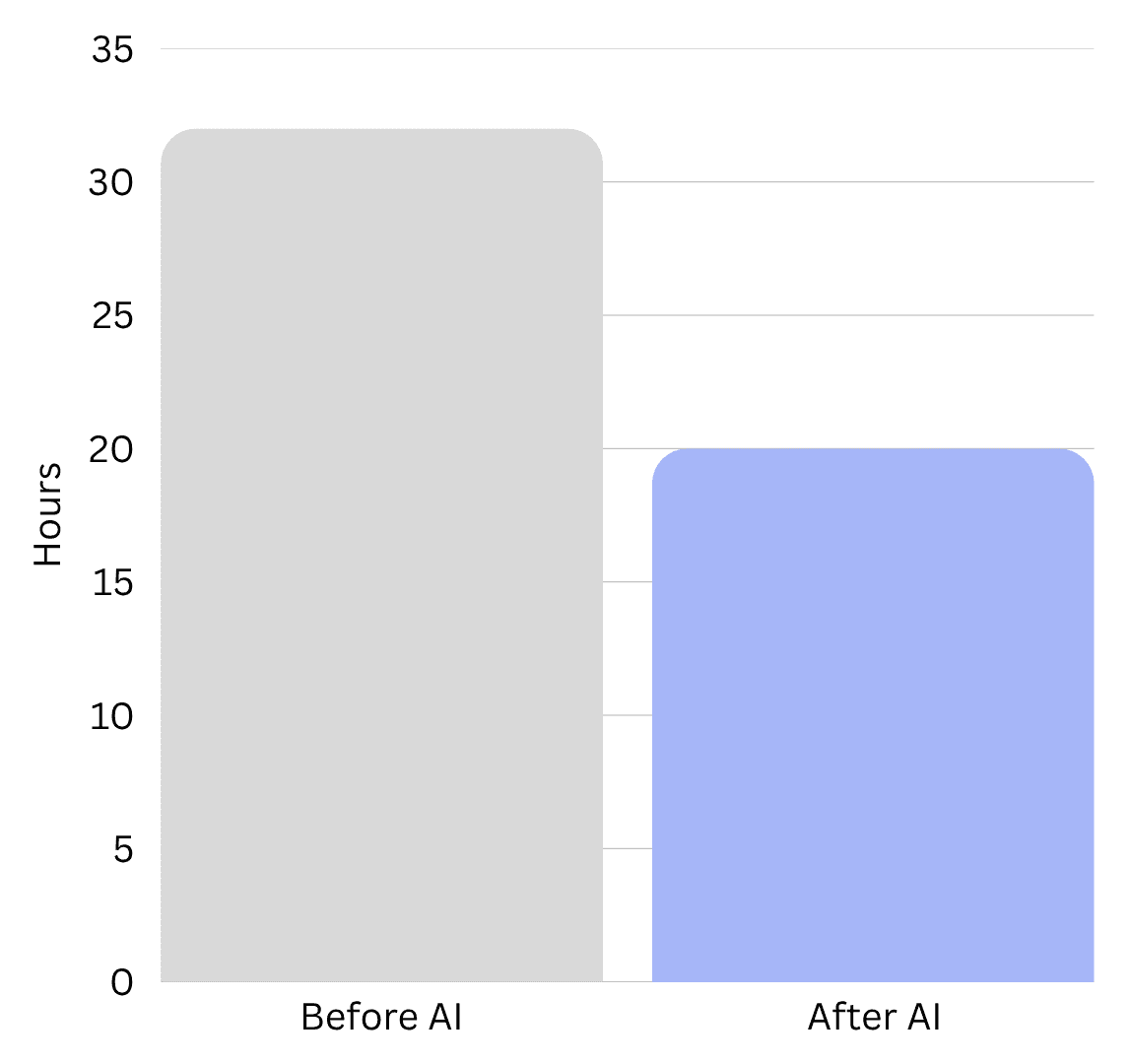
Figma MCP Server and VSCode Co-pilot significantly improved our workflow, accelerating MVP development while maintaining strong design quality and user experience.
Average hours to code 1 screen's UI

Final Product: learn-from-use 📦
The current MVP turns fragmented, offline produce trading into a single, trustworthy marketplace where farmers sell fairly and buyers purchase with confidence.
Because FarmLink is introduced into a traditional agricultural environment where digital adoption is still emerging, we did not yet have regular users during the pre-MVP phase. Therefore, instead of iterating on assumptions, we adopted a Lean MVP-first approach, prioritizing rapid development and planning for iteration during the pilot testing stage with real farmers at ADC.
🎭 Wearing multiple hats
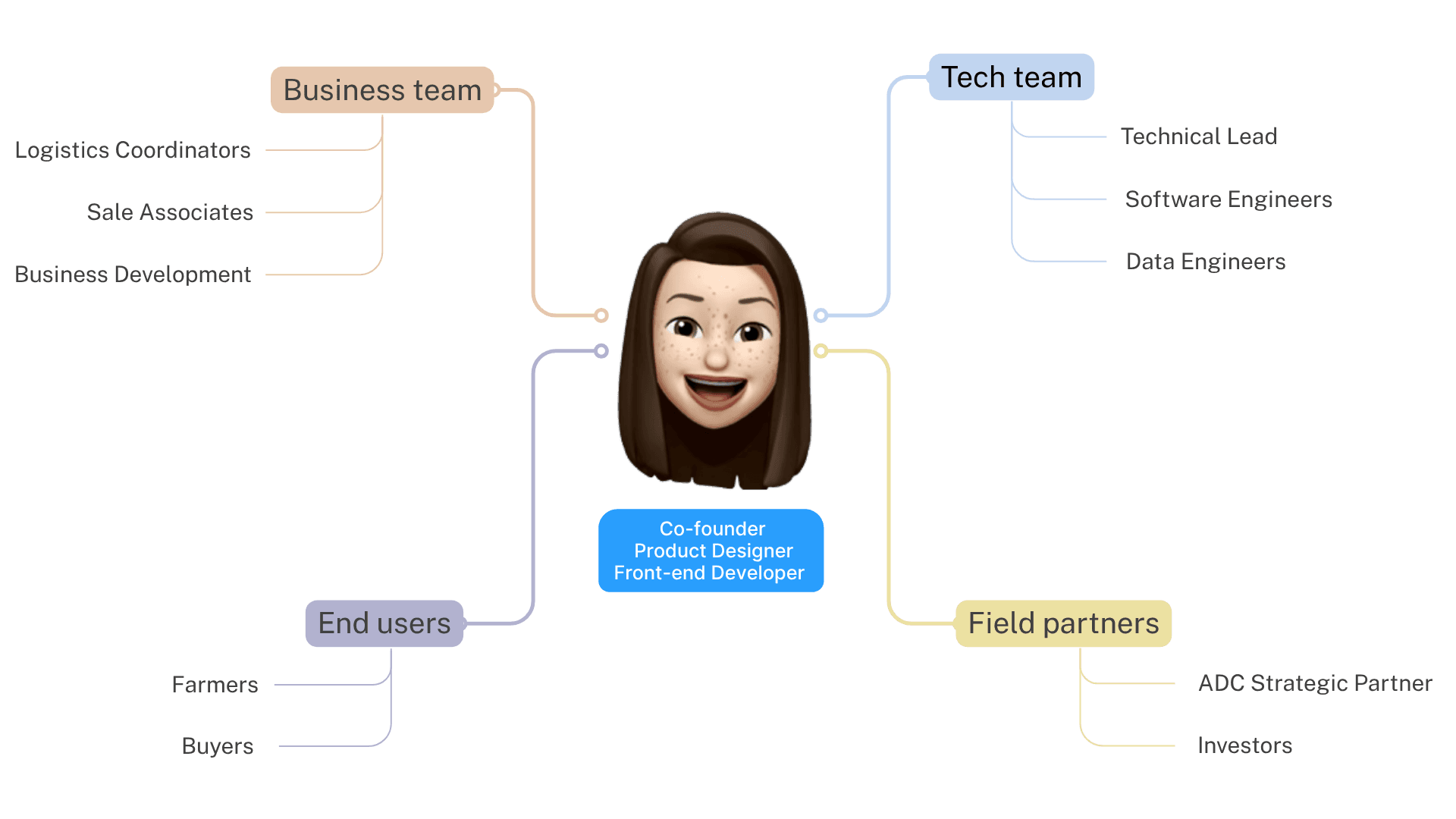
Being the founder meant stepping into every role. Beyond shaping the visions. I worked with others to make decisions on product priorities, and iterated quickly based on real feedback from farmers and ADC partners.
I also managed the technical foundation, from Figma design systems to React Native development. Outside engineering, I handled business strategy, budgeting, partnerships, and market positioning, learning to balance speed with sustainability.
This experience taught me how to think end-to-end, from vision and UX to engineering, operations, and growth strategy.
🏅 Recognized as 'Impactful Project' at University of Illinois at Chicago
Let's
design
build
create
together
© 2026 Hayley Nguyen